Minimalist gardening tips are all about simplifying your growing journey — not making it more complicated. Contrary to what ads, influencers, or garden centers might tell you, you do not need fancy tools, expensive soil blends, digital meters, or Pinterest-perfect setups to start a garden indoors.
The truth is, most beginner gardeners quit because they overbuy, overthink, and overlook the power of simplicity. This article clears the fog. Here’s a breakdown of the things you absolutely do NOT need to start your indoor garden — based on essential minimalist gardening principles.
Why Minimalist Gardening Matters
Gardening is supposed to be grounding, calming, and rewarding. But when you start piling tools, supplies, and checklists in your cart, it can become overwhelming and expensive.
Minimalist gardening works because it:
- Reduces cost and clutter
- Lowers the learning curve
- Makes gardening more accessible to renters and small homes
- Turns nature into a daily practice, not a shopping expedition
With this mindset shift, you focus on what truly matters: plants, water, light, and consistency.
Step 1 — You Don’t Need a Lot of Space
One of the core minimalist gardening tips:
You only need a few square feet to grow a functional indoor garden.
Forget the “Instagram garden room.” A windowsill, countertop, bathroom shelf, or small table is enough. Even if you’re growing veggies — space is not your limitation. Poor planning is.
Try:
- A narrow bookshelf garden
- A single-pot micro vegetable farm
- Herb jars near your kitchen sink
- A balcony corner with a ledge planter
Stop waiting for “more room.” Use what’s already there.
Step 2 — You Don’t Need Gardening Tools (Yet)
The gardening industry sells trowels, pruning scissors, soil scoops, mini forks, gloves, and more. Here’s the truth:
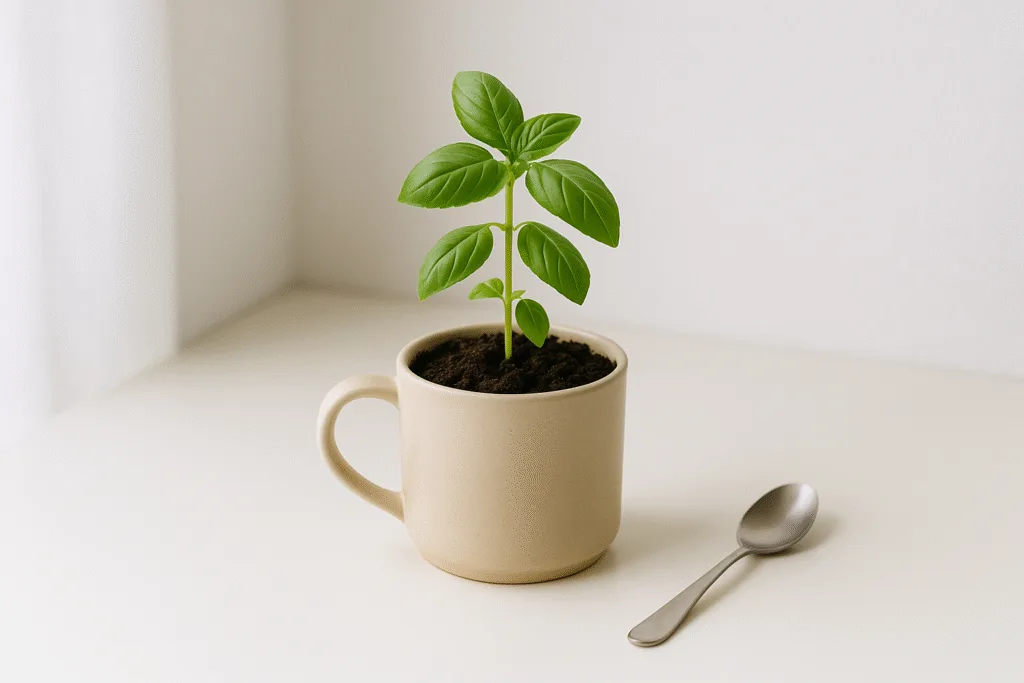
You can grow 90% of indoor plants using just your hands, a spoon, and kitchen scissors.
You don’t need:
- Garden gloves
- Pruning shears (yet)
- Soil moisture meters
- Digital pH testers
- Decorative watering cans
Start with what you have. Upgrade later if you want — not because you must.
Step 3 — You Don’t Need Fancy Pots
It gets even better: you don’t need real “planters” to grow plants indoors.
Minimalist-friendly alternatives include:
- Mason jars
- Tin cans (cleaned and dried)
- Yogurt cups with holes
- Old mugs
- Plastic takeout containers with drainage
The plant doesn’t care what it’s growing in — it only cares about light, water, and oxygen.
Step 4 — You Don’t Need Outdoor Soil
Another common misconception: that you need a giant bag of “garden soil” to start growing.
Indoor plants require light potting mixes that drain well. Outdoor soil suffocates roots and invites pests.
If the budget is tight, try:
- Leftover potting soil from a neighbor
- Blending compost with coco coir or perlite
- Growing herbs hydroponically (in water!)
The key minimalist gardening tip is: use what you have — and don’t buy just to buy.
Step 5 — You Don’t Need to Be an Expert
People assume gardening requires:
- Botany degrees
- Perfect timing
- Green thumb genetics
Reality? Plants want to live — and they only need a few basic things:
- Light (indirect or artificial)
- Water (not too much, not too little)
- A container
- Occasional patience
Start with easy plants: basil, mint, lettuce, pothos, or aloe. Fail fast, learn faster, and keep going. The best minimalist gardeners are curious — not perfect.
Step 6 — You Don’t Need to Spend Much
A complete minimalist indoor garden setup can cost you under $20. You do not need:
- Specialized grow shelves
- $100 grow lights
- Ceramic planters
- Fancy fertilizers
You can start with:
- Free plant cuttings
- Used jars
- Basic indoor soil
- Sunlight or a cheap LED bulb
Build as you learn. Invest after success, not before.
Step 7 — You Don’t Need to Grow Everything
Minimalism means priority — so prioritize the plants you actually enjoy.
Grow:
- Herbs you cook with
- Greens you’ll eat
- Plants that make your space feel calm
- Anything that holds emotional value
Don’t follow trends or try to grow everything at once — your tiny garden doesn’t need to look like a farm.
Step 8 — What You Do Need
Instead of all that stuff, here’s what matters most when starting:
- A container
- A seed or plant cutting
- Indoor potting mix (or water!)
- Light (natural or artificial)
- Consistency
That’s it. Everything else is optional.
Final Thought
Minimalist gardening is flexible. It bends to your schedule, space, and budget. You don’t need all the “essentials” — you just need to start.
Whether you grow one leafy pot or a small countertop vegetable system — the power is in doing more with less. This isn’t just gardening. It’s a mindset. Now go plant something.
Next Minimal Article You Should Read
Want to keep growing your minimal garden?
Recommended next article:
“Small Space, Big Harvest: Minimalist Garden Layouts”
— Learn simple layout strategies to maximize tiny spaces.