
Plants for sleep and anxiety aren’t just trendy décor — they play a real role in creating a calming sleep environment. Scientific studies show that certain indoor plants can help lower stress hormones, filter breathable air, and promote a sense of relaxation by influencing your nervous system.
If you’re a renter or someone living in small indoor spaces, these plants let you turn any bedroom into a sanctuary for rest — without tools, renovation, or spending a lot.
Why Plants Can Reduce Stress and Promote Better Sleep
Indoor plants influence sleep in multiple ways — and not just through aesthetics. Here’s why:
- Natural air purification: Some plants remove toxins like benzene and formaldehyde
- Oxygen release: A few unique plants actually release oxygen at night
- Aromatherapy: Many sleep plants emit calming scents proven to relax the body
- Visual therapy: Seeing greenery reduces anxiety and slows the heart rate
Growing these plants indoors adds real, restorative value to your living space.
1. Lavender
Perhaps the most famous plant for relaxation, lavender is more than just a soothing scent. It’s been used for centuries to induce sleep.
Benefits:
- Lowers heart rate and blood pressure
- Reduces anxiety and restlessness
- Can be used fresh or dried for tea, pillows, or sachets
Renter Tip: Grow lavender near a bright window — it thrives in direct light.
2. Snake Plant
Also called “Mother-in-Law’s Tongue,” the snake plant is one of the only plants that releases oxygen at night.
Why It’s Perfect for Sleep:
- Improves room air quality after dark
- Requires minimal watering
- Tolerates low-light conditions in most bedrooms
Place one near your bed or beside the nightstand.
3. Jasmine
Jasmine’s small white blooms emit a subtle, calming scent.
Sleep Benefits:
- May lower levels of anxiety
- Promotes deeper sleep with fewer movements
- Often used in essential oil blends for diffusion
This plant prefers bright light — ideal for windowsill placement.
4. English Ivy
English ivy was recognized by NASA as an air-cleaning superstar.
Why It Helps Rest:
- Absorbs airborne mold particles
- Reduces pollutants linked to headaches and breathing issues
- Works well in hanging or high-placed planters
Perfect for renters with humidity or air quality concerns.
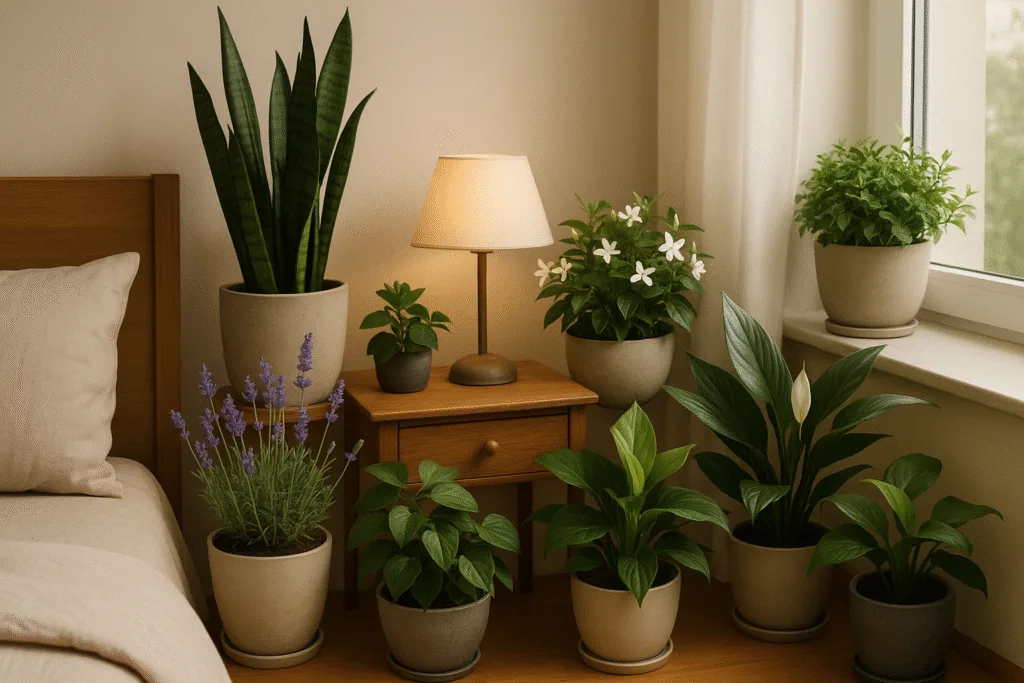
5. Aloe Vera
Aloe vera is one of the easiest plants to care for and quietly helps your sleep.
Benefits:
- Emits oxygen overnight
- Helps heal skin irritations (as a bonus)
- Thrives with infrequent watering
Let it sit on a shelf or bedside table with indirect light.
6. Peace Lily
Not only does it look elegant, but peace lilies also naturally increase humidity in rooms — which can support better breathing during sleep.
Why It Matters:
- Moist air eases dry throat and sinus irritation
- Cleanses common indoor toxins
- Low maintenance: thrives in shade
Ideal for quiet corners or low-light areas of the bedroom.
7. Chamomile (Indoor Variety)
Chamomile is widely known as a sleep tea — but it can also be grown indoors in small pots.
How It Helps:
- Calms nerves via scent
- Works well as a bedtime ritual plant
- Produces small, daisy-like flowers with a comforting aroma
Grow near sunlight or under a simple grow light setup.
Best Places to Position Sleep-Boosting Plants
- Beside the bed (but avoid overcrowding)
- On dressers or desktops
- Hanging in corners near windows
- On plant stands with trays to catch moisture
- Near air circulation points in the room
What to Avoid
- Crowding too many plants in a small space (humidity issues)
- Overwatering (leads to mold or root rot)
- Using toxic plants if you have pets
- Placing plants directly above your bed (risk of falling pots)
Final Thought
The right plants for sleep and anxiety offer more than fresh air or decoration — they create an atmosphere of calm that supports natural rest. With smart choices and strategic placement, you can turn any bedroom into a personal retreat that feeds peace to your senses, mind, and body every night.
And the best part? Every plant on this list is renter-friendly, affordable, and easy to manage — even for beginners.
Next Article Recommended
Read next: “The Sensory Garden: Grow for Smell, Touch, and Peace”