
A lot of people think they need a backyard to grow real food. But the truth is: with minimalist garden design, you can harvest herbs, vegetables, and edible greens indoors — even in apartments, small balconies, or kitchen corners. It’s not about how much space you have. It’s about how smartly you use it.
Minimalist gardening focuses on efficient layouts, multi-purpose containers, and strategic placement — using as little soil, space, and effort as possible while maximizing yield. If you want fresh food without clutter or breakdown videos, this guide is for you.
This article breaks down the most effective minimalist garden layouts, step by step, no matter how small your space is.
Why Minimalist Gardening Works in Small Spaces
Minimalist garden design is built around four principles:
- Function over excess — Only what’s necessary stays.
- Layering systems — Vertical use of space.
- Modular planning — Easy to expand or move, especially for renters.
- Real-world results — Fewer steps, more food.
This kind of gardening rejects the idea that you need raised beds and a yard. Instead, it embraces practical solutions like:
- Shelf gardens
- One-pot veggie gardens
- Hanging planters
- Countertop hydroponic setups
- Balcony rail gardens
If it grows food and fits your space — it’s good design.
Step 1 — Understand the Space You’re Working With
Before planning layouts, you need to evaluate:
- Light source (direction, duration, brightness)
- Surfaces (tidy interiors favored over expanses)
- Airflow (avoid closed-in corners without circulation)
- Access (you need easy watering access to keep consistency)
Answer these questions first:
- Is this space near a window or a light source?
- Can I reach this daily without moving things around?
- Does it make sense to place plants here permanently?
Minimalist garden design always starts with logic — then adds creativity.
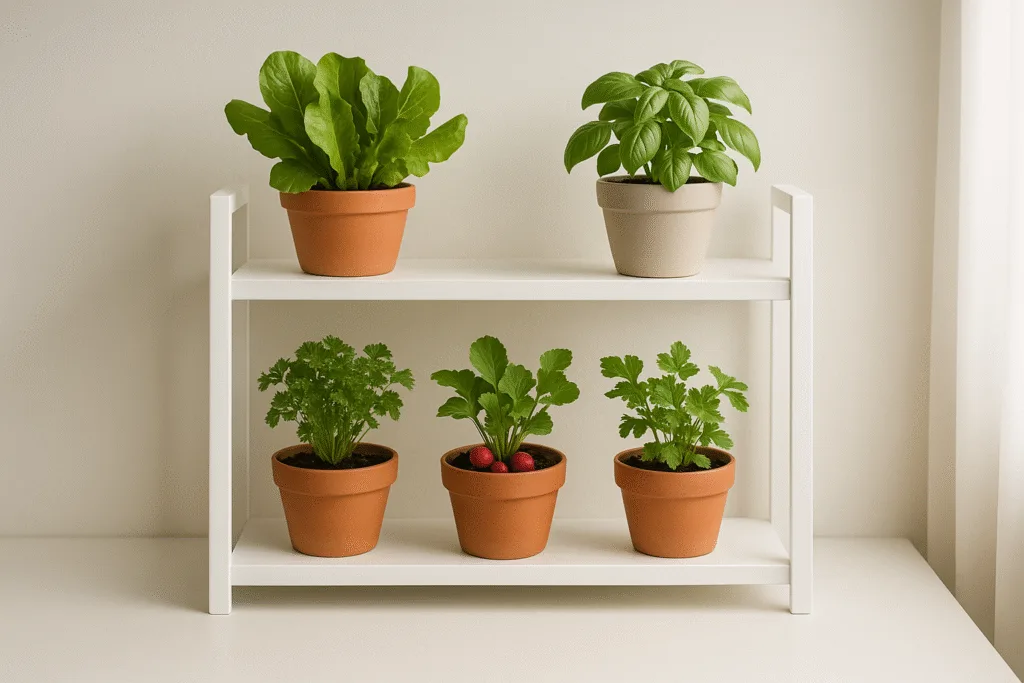
Step 2 — Layout #1: Vertical Shelf Garden
Perfect for: Renters with limited floor space
A vertical shelf garden allows you to grow 6+ plants using upward space instead of outward.
How to set up:
- Use a simple shelving unit (wood, metal, or plastic)
- Use top shelf for light-loving plants (herbs, greens)
- Use lower shelves for shade-tolerant plants or microgreens
- Put grow lights beneath shelves if needed
This vertical design brings structure and order, keeping plants in harmony with your room.
Step 3 — Layout #2: Single Table “Grow Zone”
Perfect for: Studio apartments and minimalist interior layouts
The table-based layout is simple: dedicate one side table or kitchen counter to your indoor crops.
How to set up:
- Place 3–4 matching containers or jars grouped together
- Use LED grow lights if the area lacks sun
- Keep watering supplies stored below
- Rotate plants weekly to ensure even growth
This layout blends seamlessly with open-plan interiors — no clutter, maximum control.
Step 4 — Layout #3: Over-the-Sink Herb Garden
Perfect for: Small kitchens
The sink windowsill is an ideal small-space garden spot. It’s naturally lit and close to water.
How to set up:
- Mount suction cup shelves or tension rods above the sink
- Grow herbs like basil, mint, chives, and thyme
- Keep plants directly above the sink for easy watering
This setup relies on no tools, no holes, and creates a functional indoor food zone hidden in plain sight.
Step 5 — Layout #4: Balcony Railing Garden
Perfect for: Small apartments with even a tiny outdoor ledge
Turn your balcony railing into a miniature farm by using smart fixtures.
How to set up:
- Use railing planters (non-permanent)
- Pair dwarf tomatoes with trailing basil
- Use bush beans, salad greens, and radishes for compact harvests
This uses outdoor light, airflow, and distance to keep plants healthy — without needing a full garden bed.
Step 6 — Layout #5: Hanging Indoor Planters
Perfect for: Home offices, bedrooms with ceiling space
Minimalist hanging planters make use of vertical negative space — while adding an architectural feel.
How to set up:
- Hang 2–3 lightweight planters near windows
- Use plants that trail downward (like pothos, strawberries, or spinach)
- Keep height at eye-level or slightly below for easy trimming
This design turns unused overhead space into a garden zone.
Step 7 — Pairing Plants Like a Pro
Smart minimalist garden design also means pairing plants that work well in tight conditions.
These are proven combinations:
- Lettuce + scallions + radish micros
- Basil + small cherry tomato + parsley
- Mint + chives + cilantro
- Spinach + sorrel + arugula
Combine plants with similar sun and water needs — and never overcrowd the root zones.
Step 8 — Best Tools for Minimalist Gardeners
Even minimalist setups benefit from a few items:
- Spray bottle
- Small watering can or cup
- Pocket scissors
- Grow light (optional)
You don’t need a garden fork or gloves — use kitchen spoons and hands for the basics.
Final Tip: Grow with Intention
Minimalist garden design is about turning “I should grow something” into “this plant belongs here.” It’s not visual clutter. It’s functional life — embedded in your dining room, above your sink, or beside your bed.
Start small. Master one layout. Expand if needed. The garden will grow as your confidence does.
Next Minimal Article You Should Read
Continue maximizing your compact indoor garden:
Recommended next article:
“Growing Food Indoors on a Budget: Under $20 Setup”